

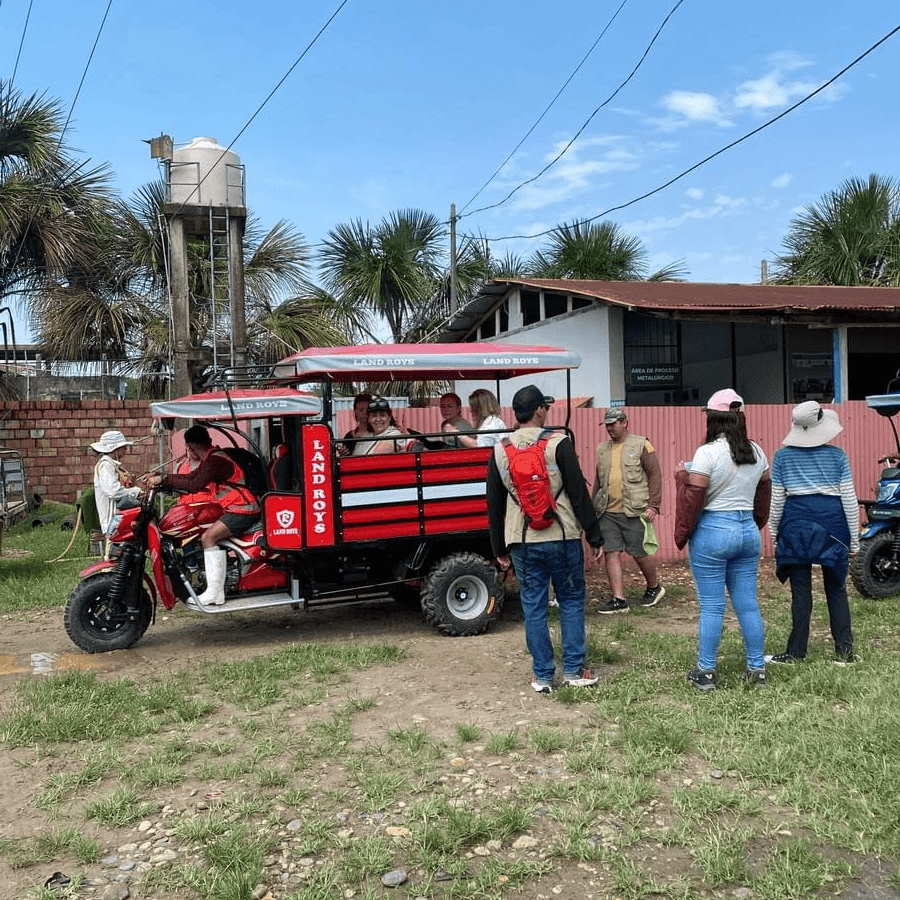
I clung to the bars in front of me. Every hole in the ground, every missing plank on the wooden bridges, I cushioned by rising from my bright red seat. The ride in small off-road vehicles to the AMATAF mines on 15 October took us through the Amazon rainforest for a few hours, until the forest was no longer there and we were bumping through an unreal lunar landscape: the illegal gold mines, as someone explained to me.
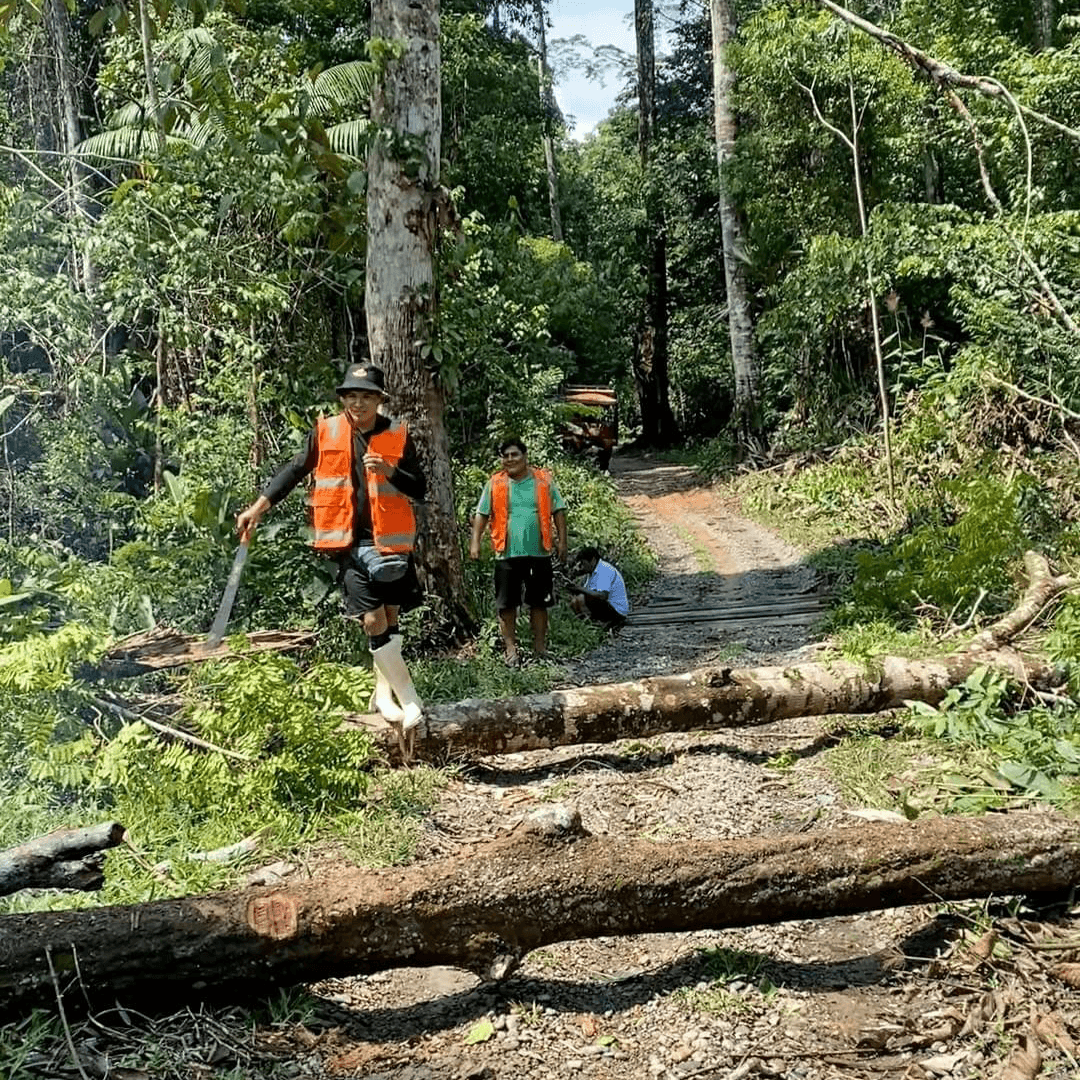
Only ten minutes into the drive we had to stop: three tree trunks had fallen across our path and had to be sawn apart.
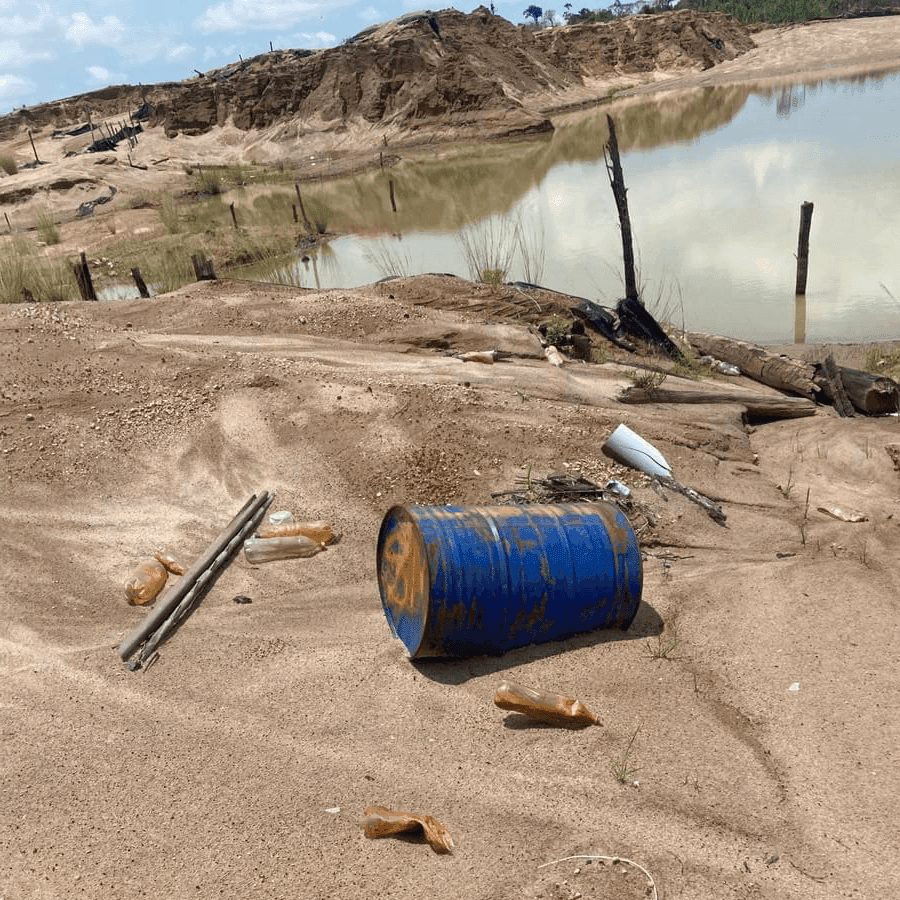
Abandoned illegal gold mines all around the Fairmined mines.
When we finally reached the first Fairmined-certified mine, ABEL 3, things became a little greener again, and here and there stood a gravel mound with small green plants sprouting from it. The first steps of renaturation, we were told. We, a group of goldsmiths and gold traders from Europe and North America, were warmly welcomed by the staff, and we eyed each other with curiosity. It is the first time I have met Fairmined miners in Peru in person.
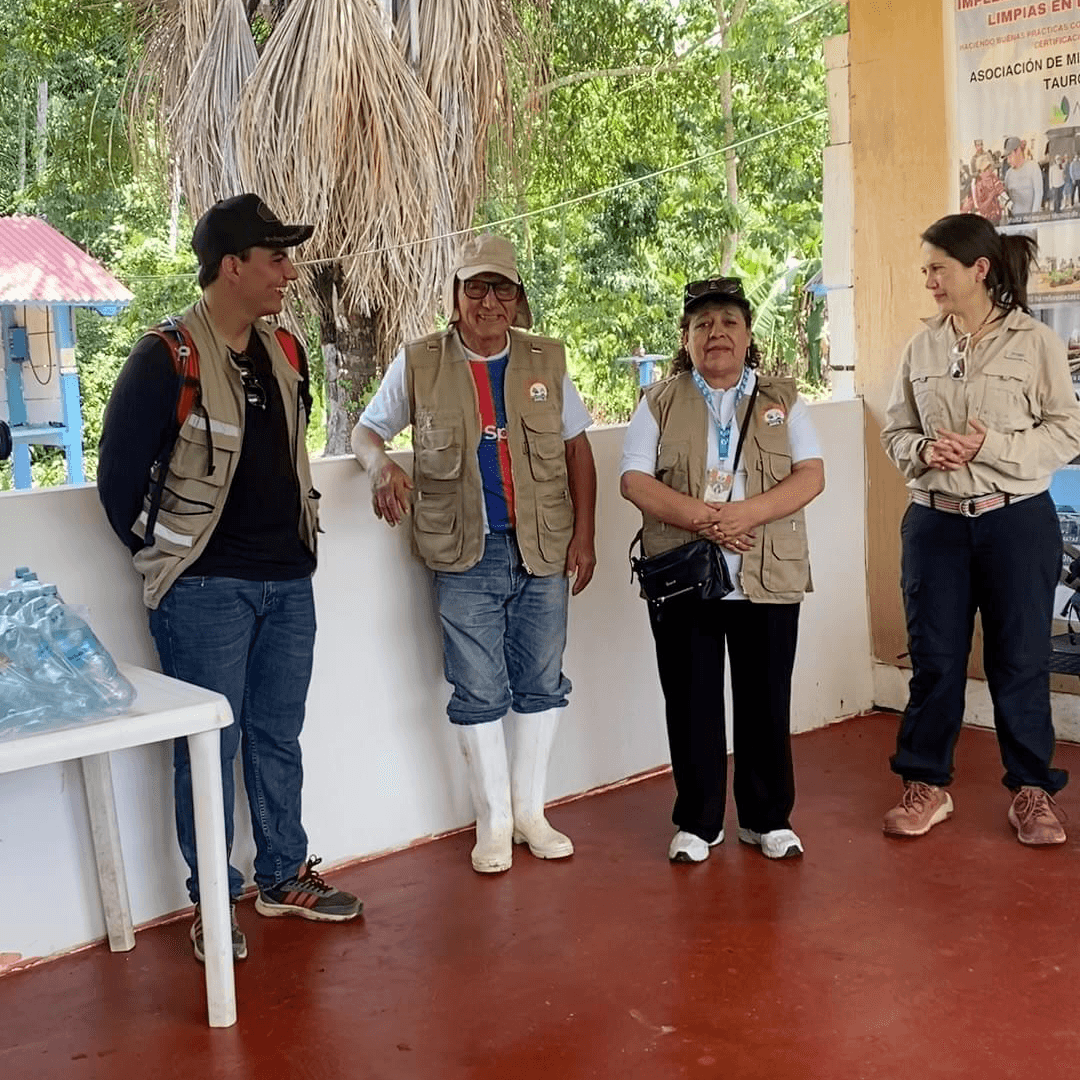
Neider, Luis, Vilma and Gina from Fairmined.
Before we drove to the extraction site, Vilma, president of AMATAF, and her husband Luis, holder of the mining rights, welcomed us. Vilma's eyes lit up as she told us: “See with your own eyes how we try to work responsibly here, while nobody around us does.” You could feel her dedication to spreading responsible practices. She also uses the association to train other miners how to take this path.
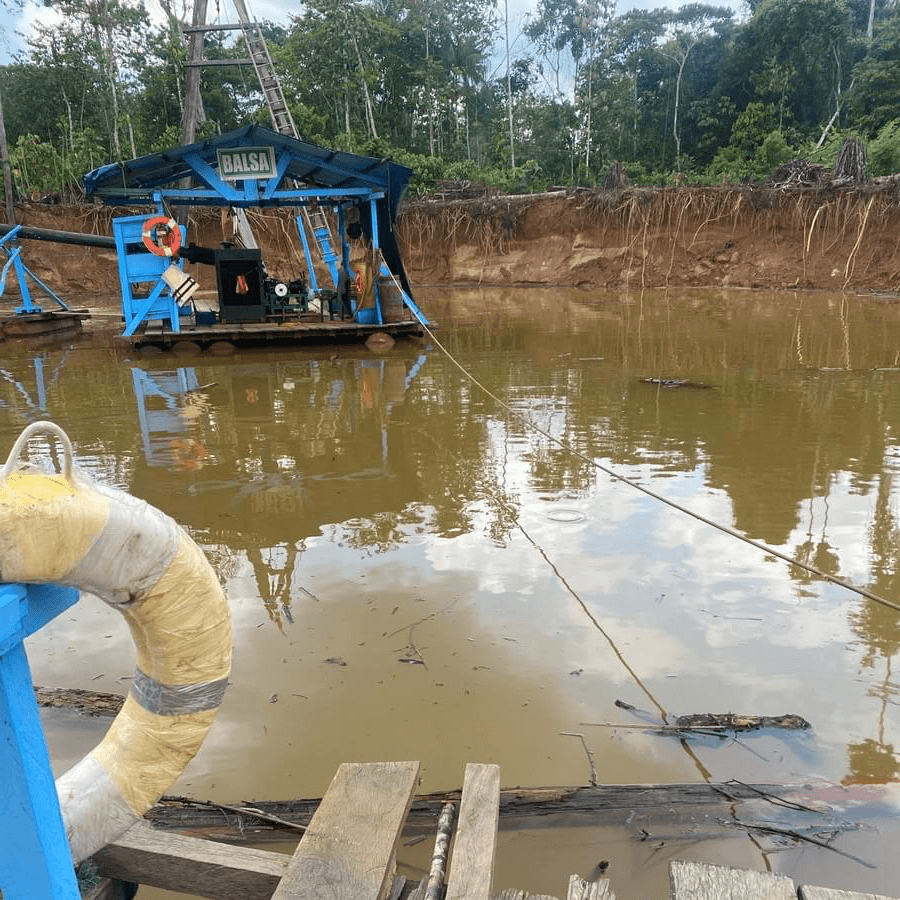
On a raft, the machine that pumps the sludge up.
Then the moment had finally come: we got to see how the gold is taken out of the ground. We did not go into an underground tunnel, as I had always imagined. The mining was alluvial: a mixture of sand, water and gold was pumped up from a water-filled pit and washed back down over a chute. The chute was lined with a mat that the gold-bearing sludge stuck to. Whatever was caught there was processed further: in a second step, the precious sludge was washed with water on a sloping surface, and the heavier gold settled at the top. And all of this without mercury, as we were told. We saw this highly concentrated gold mixture again the next day at the processing plant.
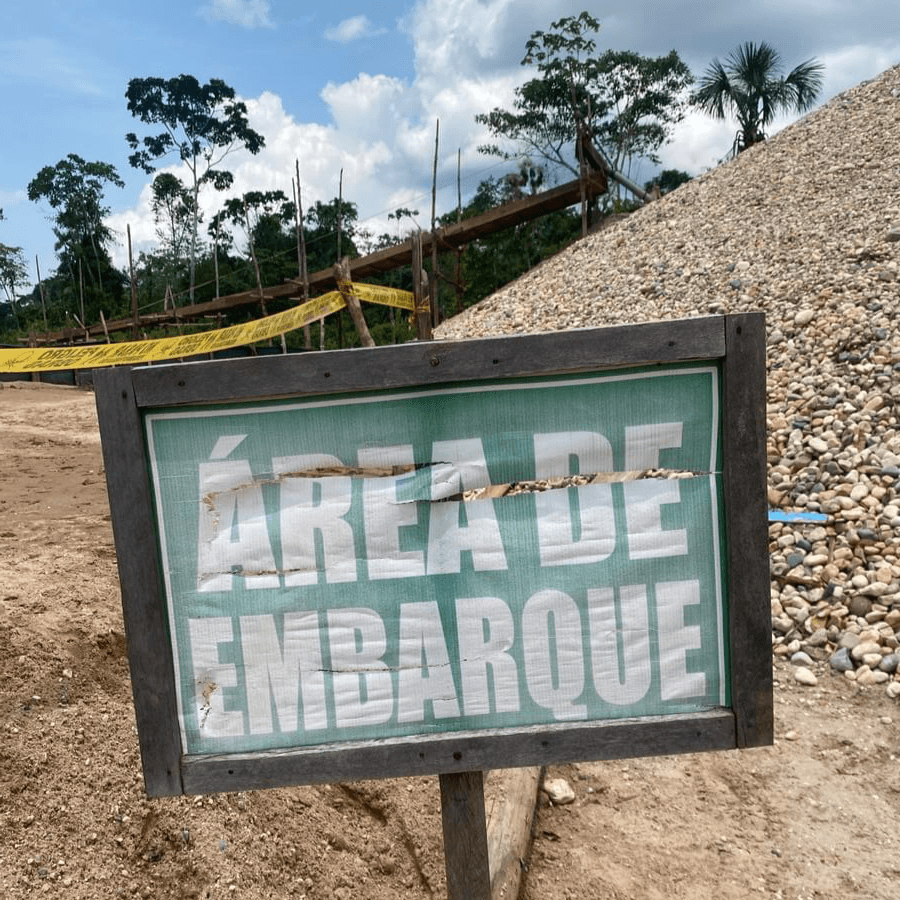
In the background, the chute where the gold is caught in mats.
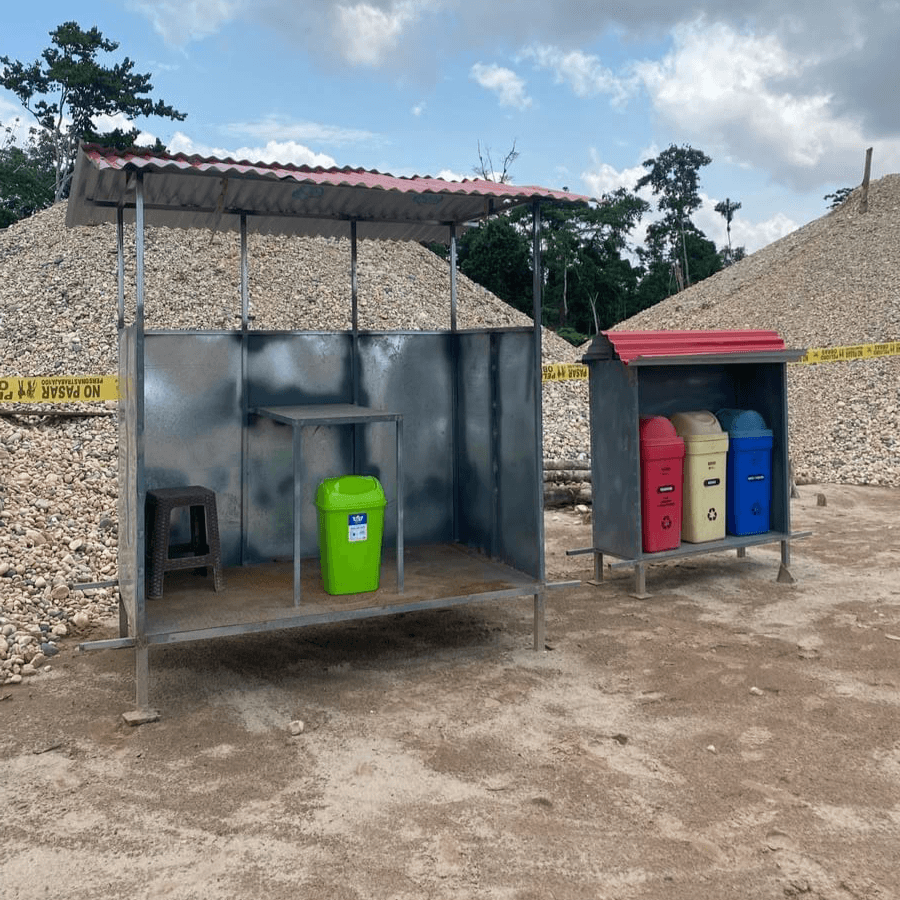
A recycling station in the middle of the mine.
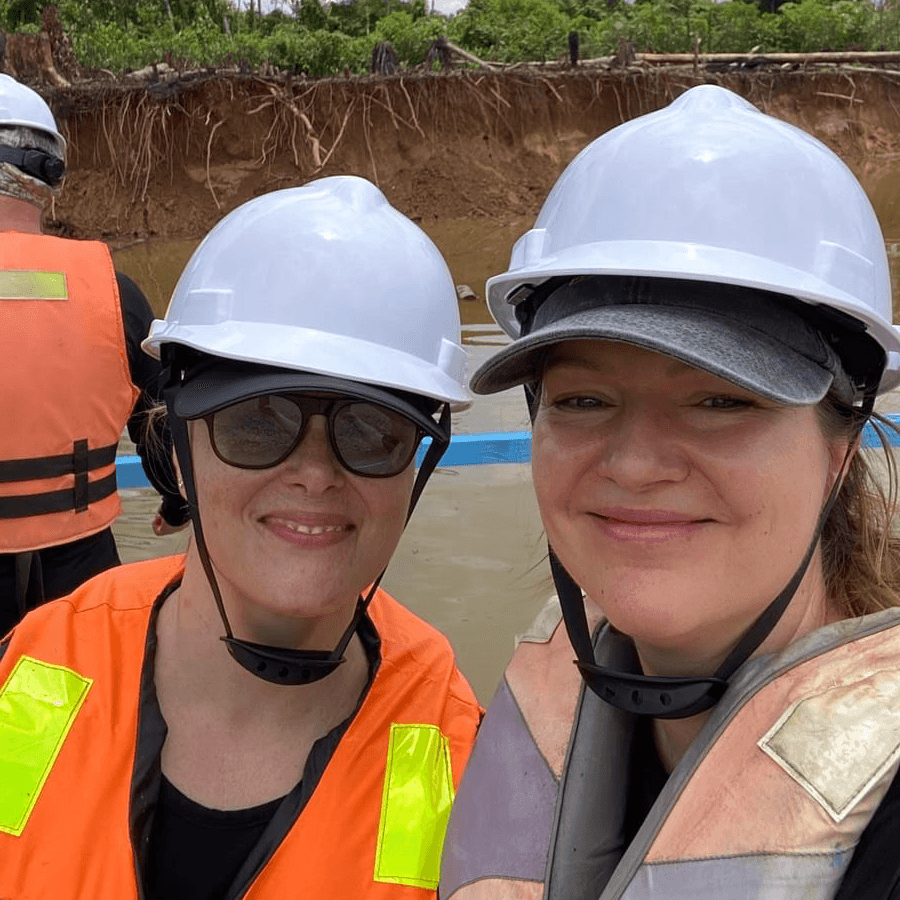
Safety first, with Johanna Brierley, goldsmith from Toronto.
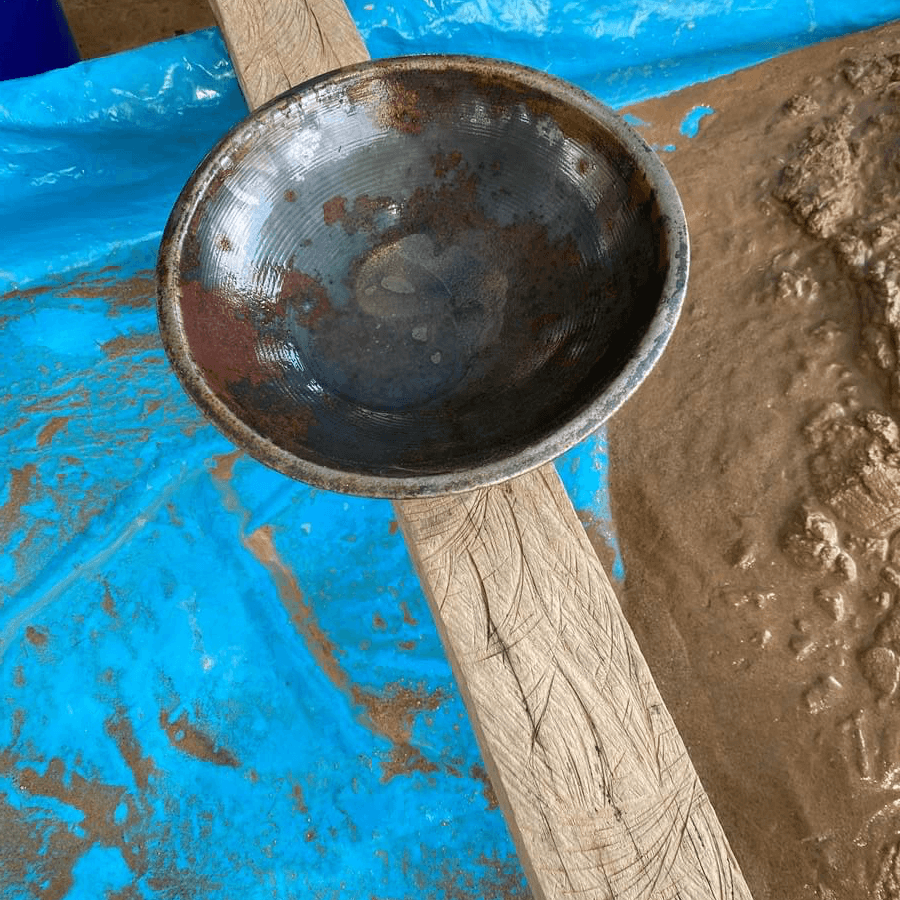
Next, our off-road vehicles took us to the Fátima 3 mine. It has been run for three generations, and here, too, the owners have committed to responsible mining. Liz and her parents showed us the next processing step, which they call “clarification”. Unlike at ABEL 3, the sand concentrate here was black, and it was also washed with water. The gold clearly settled at the highest point, while the sand was washed down. This concentrated mixture was now ready for the processing plant, which we would visit the following day.
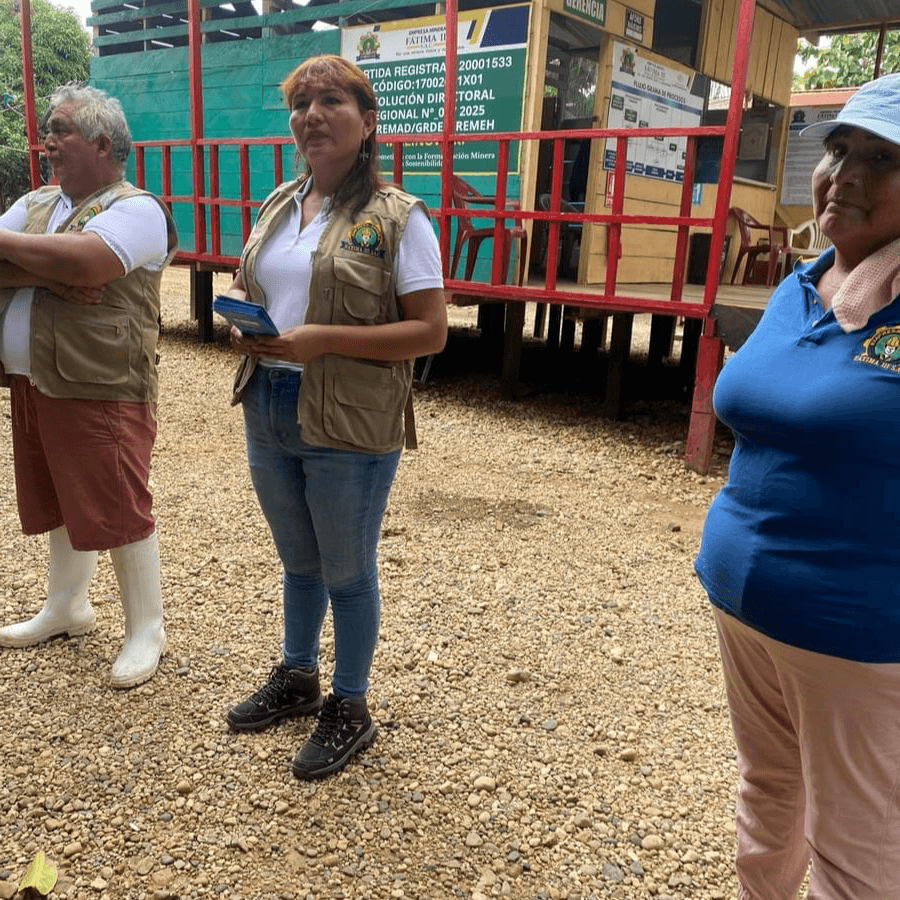
Liz und ihre Eltern von der Mine Fatima 3.
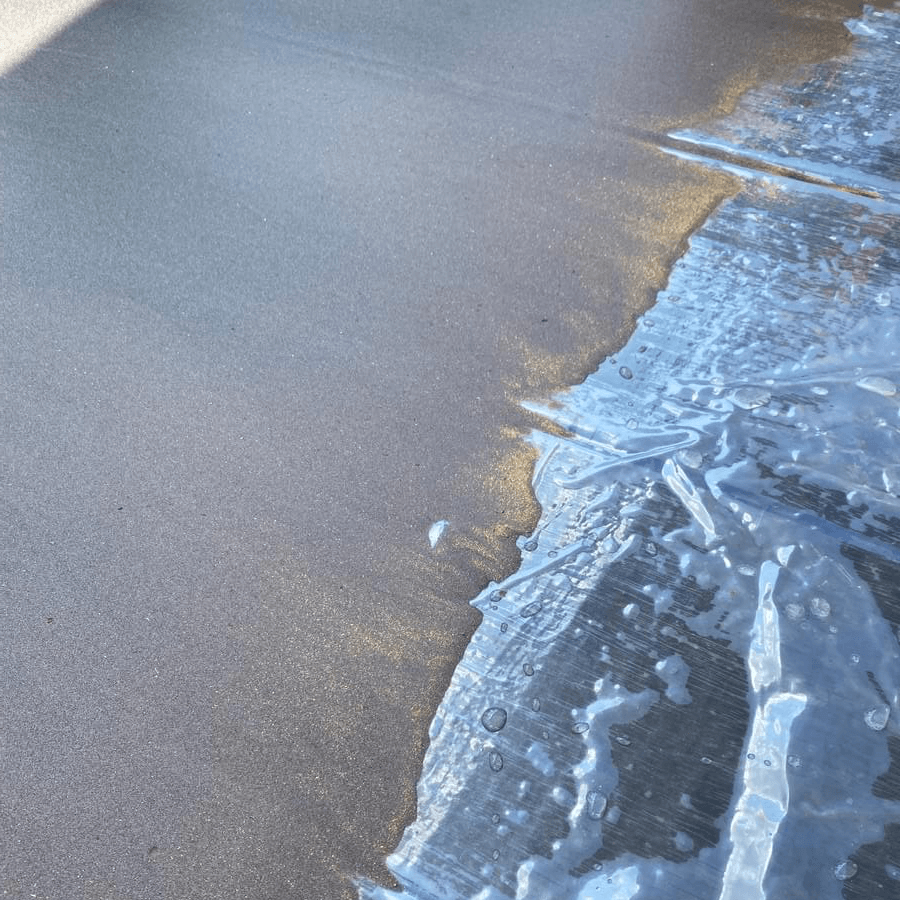
On the slope the sand slides down, while the gold stays at the top.
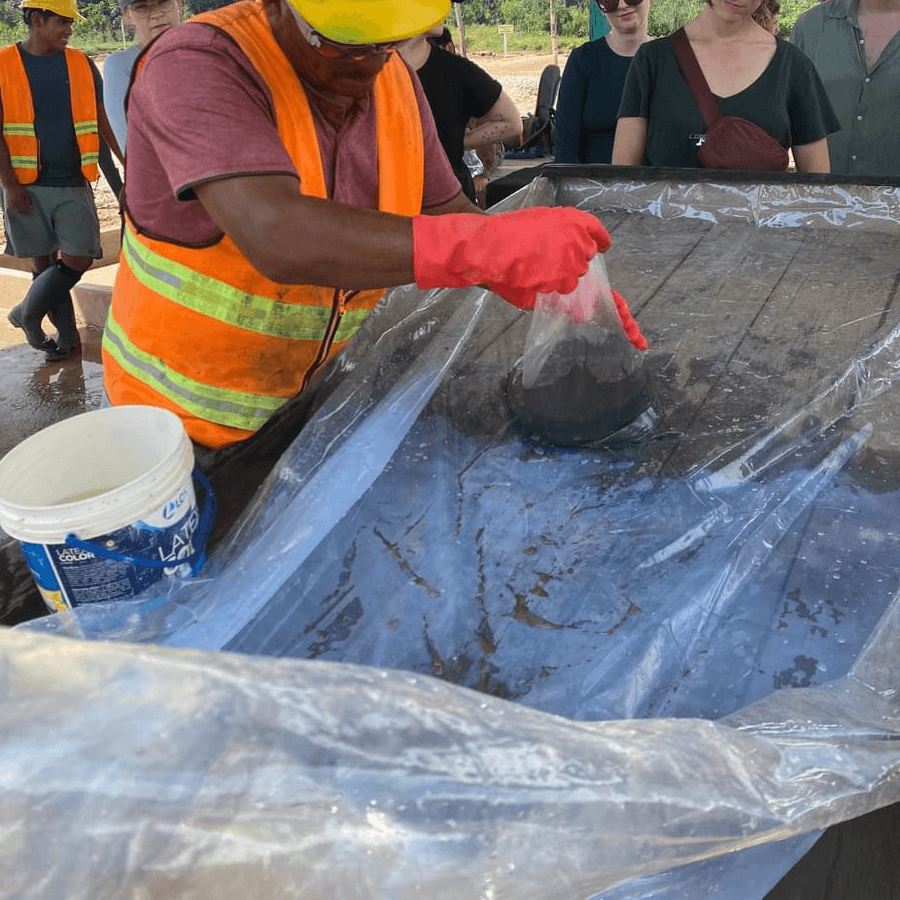
The sludge, now with a high gold concentration, goes into a bag and then into a bucket.
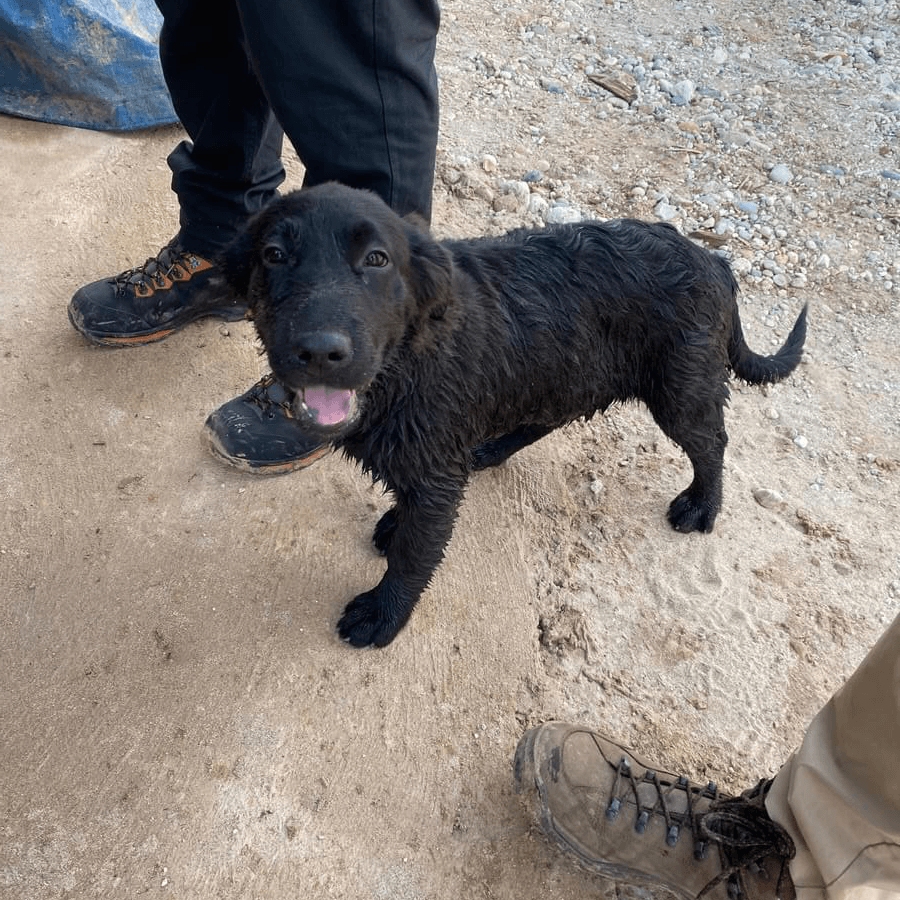
Our little follower.
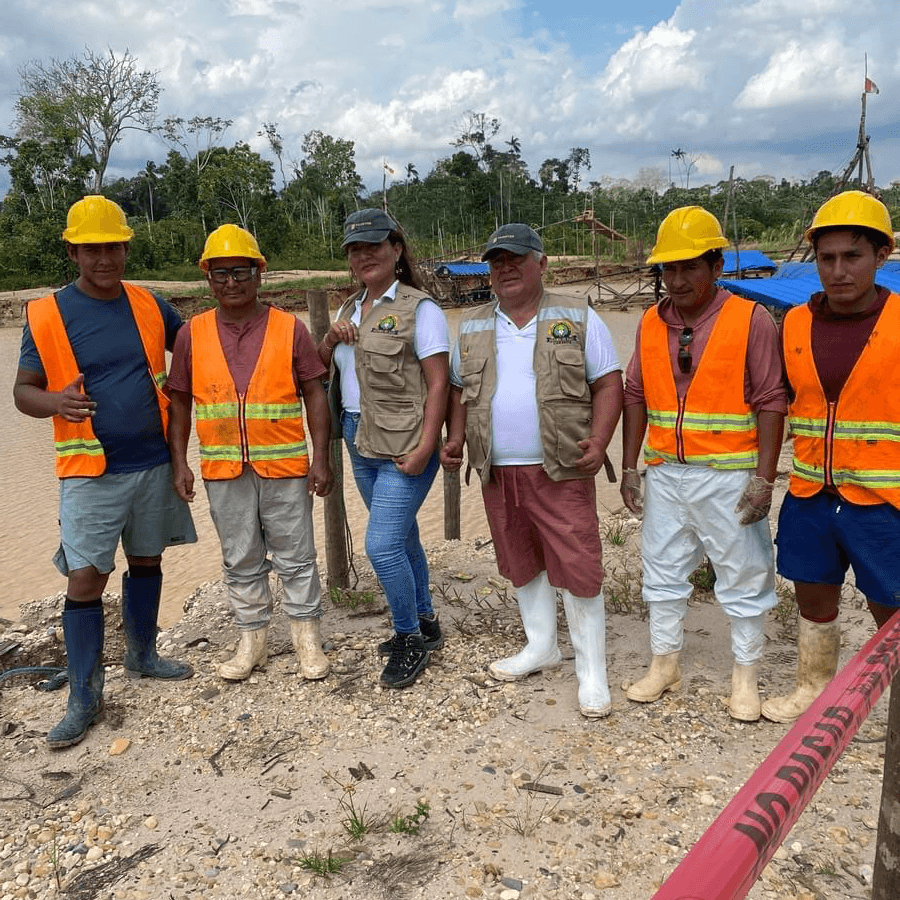
The miners of Fátima 3 with Liz and her father.
Afterwards we looked at the tree nursery. Which plants grow best on the gravelly soil that is left behind? They plant and they experiment. Small tropical saplings as far as the eye can see, waiting to be planted out and hopefully soon the beginning of a diverse, living forest.
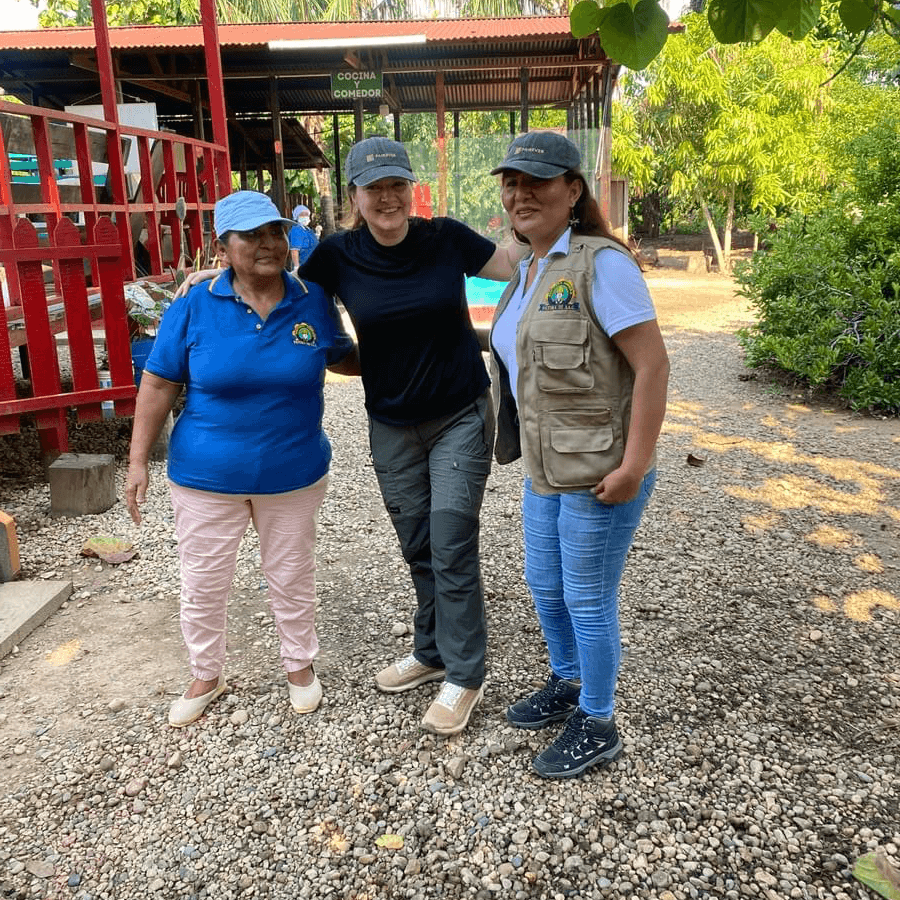
With Liz and her mother.
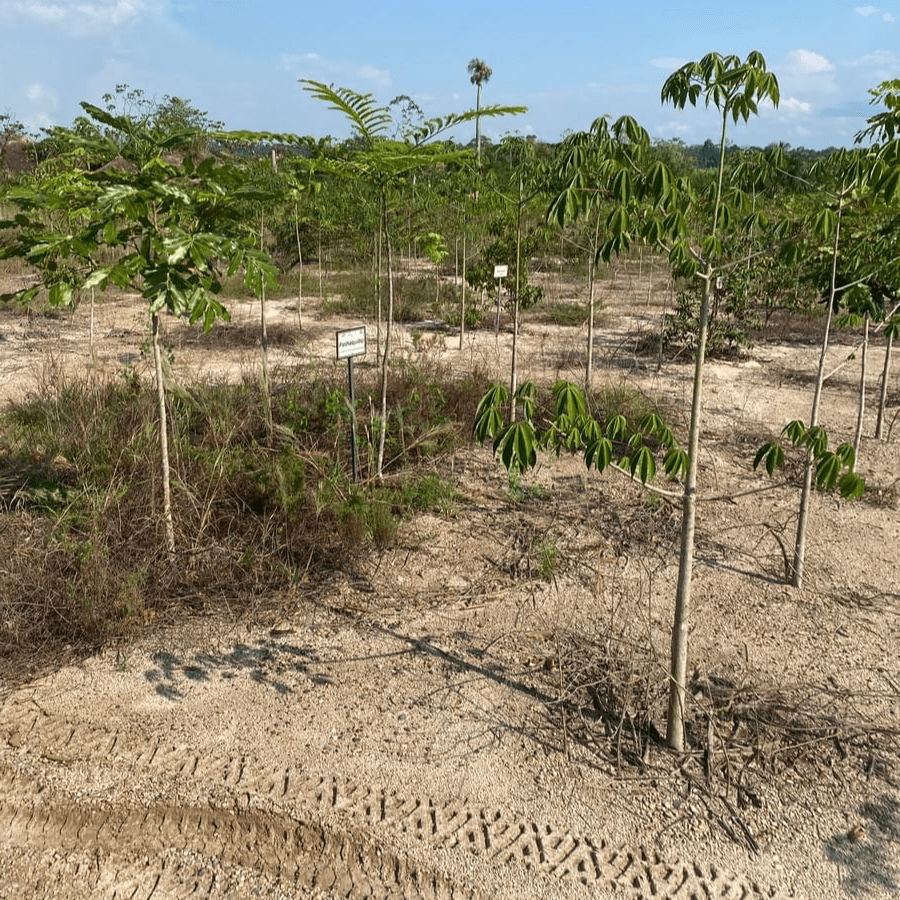
Tree nursery
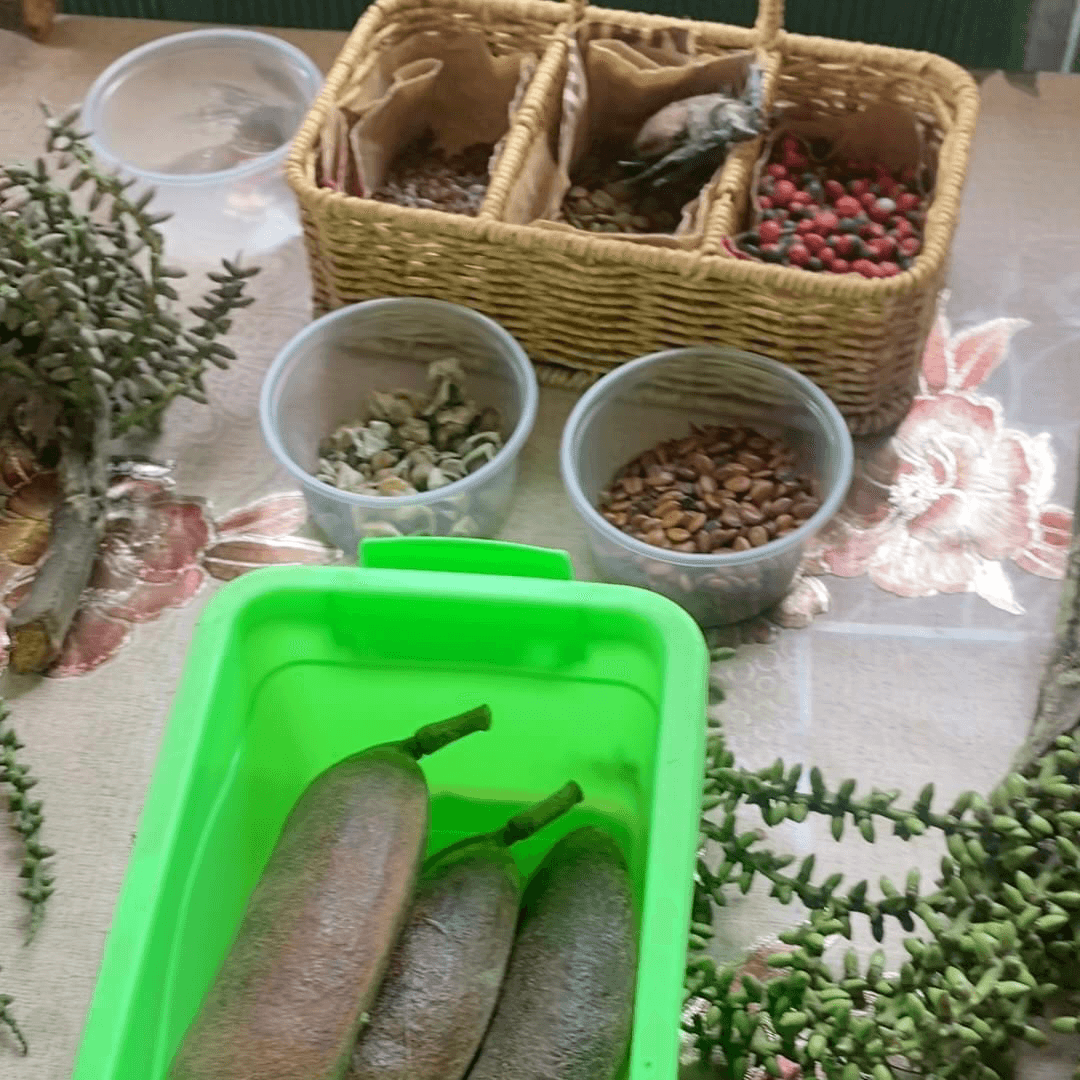
Before we climbed back into our little vehicles and returned to Puerto Maldonado, we visited one more mine, Linda 2. Here the workers spend their free time playing football together. In their training rooms they showed us the seeds they use for reforestation.
The next day I finally held real pieces of gold in my hand. They were heavier than I had expected. At the processing plant near the AMATAF mines, the gold and sludge mixture was put on a shaking table. The sand was shaken off the gold and carried away by the water. We could even watch it happen. Now the gold was finally pure enough to be melted. The shaking table was the crucial tool that made it possible to do without mercury. The gold is separated from the sludge by movement and water alone.
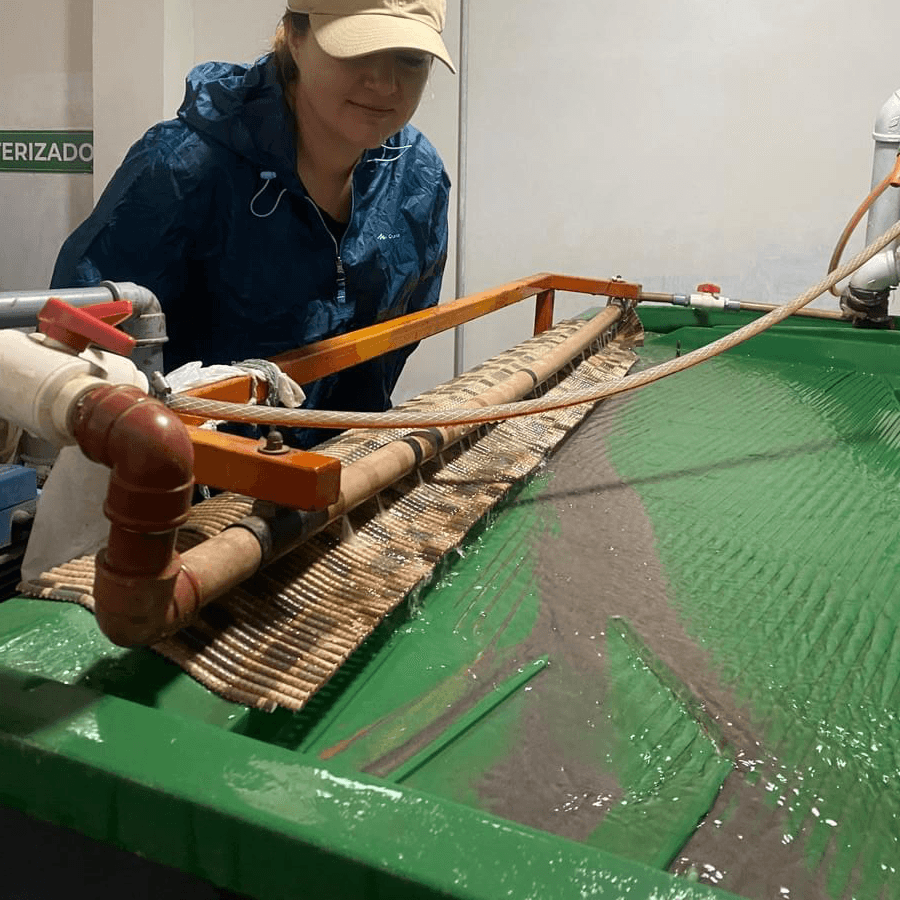
The shaking table
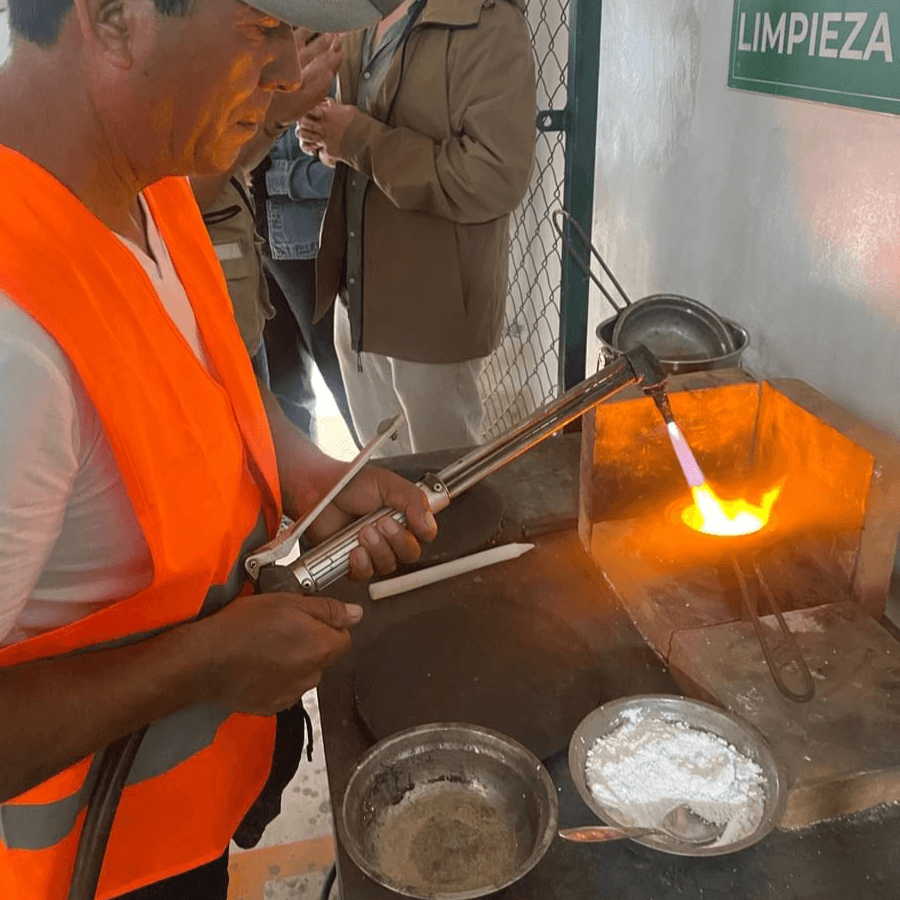
Melting the gold.
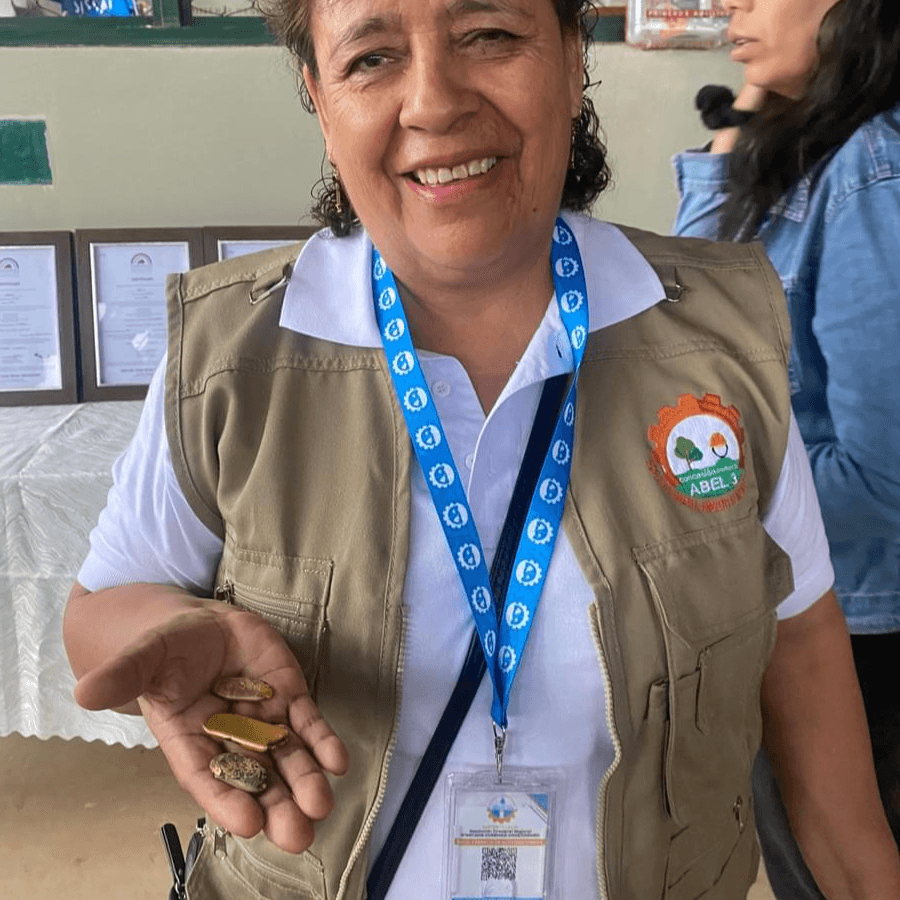
Vilma with the result of a few days.
“See with your own eyes,” Vilma had said. I did. And I also felt it on the arduous journey to the mines, which led through beautiful forest and in the end only through sand, empty diesel drums, abandoned makeshift huts and what you cannot see: soil contaminated with mercury. “Don't eat fish in Puerto Maldonado, it contains mercury,” we were told. Illegal gold mining has far-reaching consequences, visible and invisible.
The gold I work with comes from Ananea. I will tell you about that in the next part.
In brief: AMATAF, Fairmined and mercury
FAIRMINED is a standard for artisanal and small-scale mining, developed by the Alliance for Responsible Mining (ARM). ¹
AMATAF (Tauro Fátima Artisanal Miners Association) is an association in the province of Tambopata, Madre de Dios region, in the Peruvian Amazon. It includes the four concessions Abel 3, Fátima, El Príncipe Azul 1 and Linda 2. ²
According to Fairmined, AMATAF is the first alluvial mining organisation in the Amazon to receive Fairmined certification. Alluvial means that the gold is extracted from river deposits. ²
On its way to certification, AMATAF was supported by the organisation Pure Earth and by ARM. ¹ ²
Renaturation means bringing land that humans have altered back to a more natural state. Gold mining often leaves behind areas of gravel and sand without fertile soil. According to Pure Earth, the AMATAF mines are reforesting former mining areas with Pure Earth's support, partly with seedlings from their own tree nursery. ¹ According to Pure Earth, the mines have been extracting their gold since 2019 using a gravity-based method that works without mercury. ¹
Why mercury matters: According to Pure Earth, artisanal and small-scale mining is the largest source of mercury pollution worldwide, at an estimated 1,000 tonnes per year. ¹
What mercury is used for: In artisanal gold mining, mercury is often mixed with the gold-bearing sludge. It binds the fine gold particles into a lump (amalgam). This is heated, the mercury evaporates and the gold remains. The fumes are inhaled, and residues end up in soil and rivers and from there in fish.
In 2016 the Peruvian government declared a national state of emergency in Madre de Dios because of mercury contamination. According to estimates by the Peruvian Ministry of the Environment, up to 40% of the region's population had been exposed to mercury. ¹
Vilma Contreras, president of AMATAF, is on the board of the National Network of Women in Artisanal and Small-Scale Mining in Peru (RNM-MAPE), founded in 2022. ³
Sources
Pure Earth: Annual Report 2023/24, pp. 16, 18, 57, 58
Fairmined: Community profile AMATAF, fairmined.org/community-profiles-4/amataf (accessed November 2026)
Fairmined: “Promising progress in small-scale mining in Peru: The National Network of Women in ASM is established” (2022), fairmined.org/promising-progress-in-small-scale-mining-in-peru-the-national-network-of-women-in-asm-is-established